
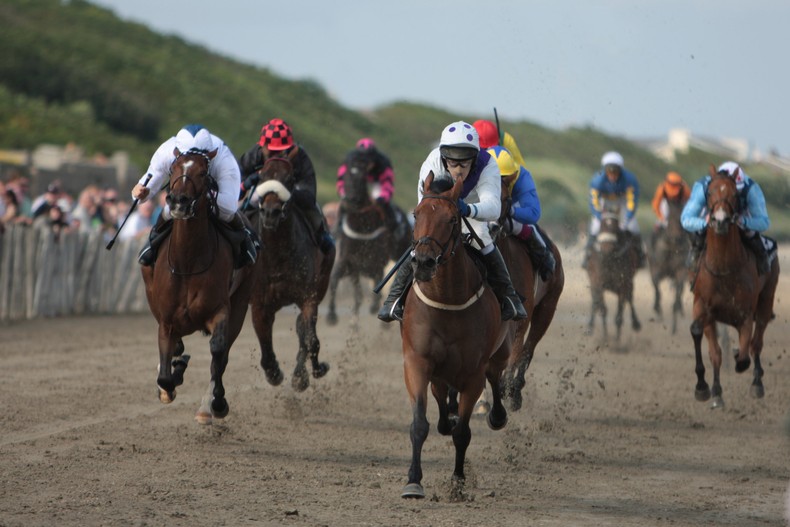
Horse racing has a long and proud tradition in Ireland, but no racing venue on the island is quite like Laytown. For one day each year, a small seaside village in County Meath transforms itself into a fully-fledged racecourse hosting action under the Rules of Racing. It does this despite having no permanent grandstands, no grass track, and no sign that a race venue even exists for most of the year. This is because racing here takes place on a beach, supported by temporary structures.
For more than 150 years, Laytown Races has captured the imagination of locals, racing fans, and curious visitors alike. It is a fixture that sits alone on the Irish racing calendar, famous for its quirky charm and unusual challenge. In this guide, we tell you everything you need to know about the Republic of Ireland’s most unique racecourse.
About the Racecourse
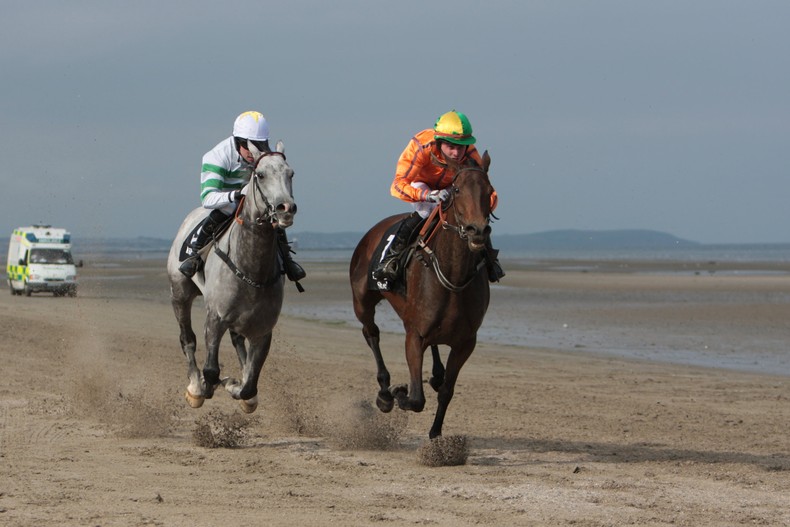
Laytown is not a racecourse in the conventional sense. For 364 days a year, it does not exist. Only when race day approaches are temporary structures brought in – marquees where jockeys can change and horses can be weighed, rails to mark the track, and stewarding facilities to ensure safety.
This fully temporary course is seven furlongs long and holds contests either 6f or 7f in length. While the distances are short, the races are not without challenge. Every inch of the course is sand, and this surface is one of Laytown’s big quirks. Anyone who has jogged on dry sand knows how energy-sapping it can be. But at Laytown, the races take place on compacted wet sand left firm by the retreating tide. This creates a surprisingly fast surface, allowing horses to reach impressive speeds.
Most spectators watch the quickly run races by lining the rail or taking up positions on a grassy mound overlooking the beach. It is a simple, informal setting that provides every visitor with a clear view of the action. While very basic, it does allow spectators to stand just a few metres from the horses as they thunder past.
Despite the modest facilities and tiny location population, Laytown Races is quite a popular course with over 5,000 people regularly attending the meeting. It was particularly popular in 2019, when it reached its maximum capacity of 6,204 attendees. The seaside setting, combined with the rarity of the event, makes it a social occasion as much as a sporting one. Any Irish, or even British, horse racing fan should try it at least once.
Safety at Laytown
In 1994, a tragic accident raised questions about the configuration at Laytown, which at the time held some races around a hairpin bend. The bend was dropped after this point and all races since have taken place in a straight line (or rather nearly straight as the bay has a slight curve). Also, organisers now drain any excess water from the course during the meeting, following the 2002 edition, which saw heavy rain.
The unsafe conditions of 2002, which caused the meeting to be called off, led to speculation that this could be the end of racing at Laytown, especially as it coincided with the withdrawal of long-time sponsors Guinness. However, organisers retained faith and have made several changes to further improve the safety of the meeting.
Some of these changes include:
- Only horses aged four and older are permitted to race
- Blinkers cannot be worn
- Apprentices who claim more than 5lb cannot ride
History
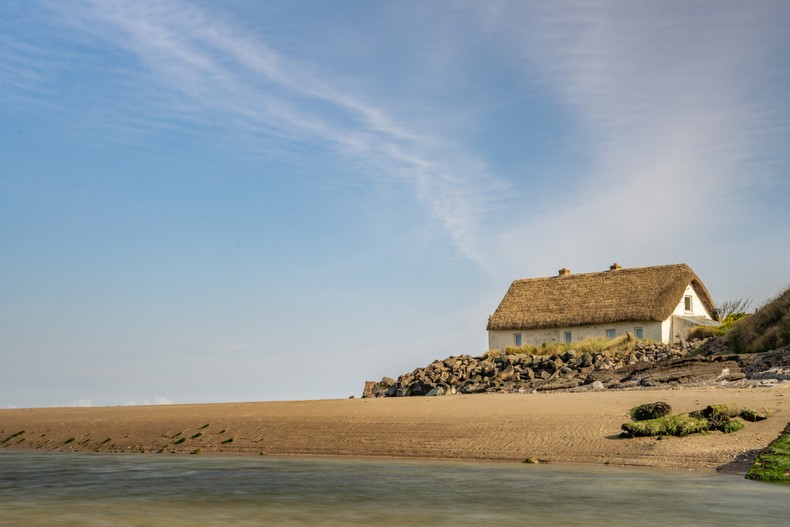
The history of Laytown Races stretches back to 1868, when contests were first held alongside the Boyne Regatta. With the tide high, boats competed on the water. When it receded, horses took to the beach. It was an ingenious way of blending two sports, though in truth the regatta often overshadowed the racing.
Inconsistent tides sometimes meant there was no time for racing once the boats had finished, so the horse element of the event fell into irregularity during the late 19th century. The arrival of a new parish priest in 1901 proved decisive. Against the wishes of the Bishop of Meath, he championed the idea of racing as a standalone event. From then on, Laytown grew into a fixture in its own right.
Beach racing once existed in other parts of Ireland too, such as Milltown Malbay in County Clare and Baltray, just a few miles from Laytown itself. But while those courses faded into history, Laytown endured. Apart from breaks during the world wars and the COVID-19 cancellation in 2020, it has been held almost every year for well over a century.
The event has even attracted some famous names. Charles Stewart Parnell, the influential nationalist politician, served as one of Laytown’s first stewards. In 1949, Aga Khan III and his wife, the Begum, attended in person, lending a touch of international glamour to the seaside spectacle. So rich is its story that in 2018 a book was published to mark the races’ 150th anniversary: Laytown Strand Races – Celebrating 150 Years.
Famous Races and Results
While Laytown hosts Rules racing, it does not host any high-class events. Prize money for each race is below €10,000, meaning it is not an event that tends to tempt any big-name horses. There have been many familiar jockeys in attendance over the years, though. Champion jockeys Ruby Walsh, Colin Keane, Pat Smullen and Joseph O’Brien are just a few of those to have bagged themselves a Laytown winner.
For any jockey wishing to win at every single Irish racecourse, Laytown is often the toughest one to cross off the list, with it only having six races per year. A delighted Mark Enright managed to complete the feat in 2021 when winning with a 10/1 shot Hell Left Loose.
Although Laytown does not bring in big-name horses, some competitors have gone on to make a name for themselves afterwards. Labaik, who won the Supreme Novices’ Hurdle in 2017, attended Laytown just months earlier. Not a fan of the sand surface, though, he simply refused to race, so spectators were not able to see the future Cheltenham Festival star in action.
Other Unusual Horse Races
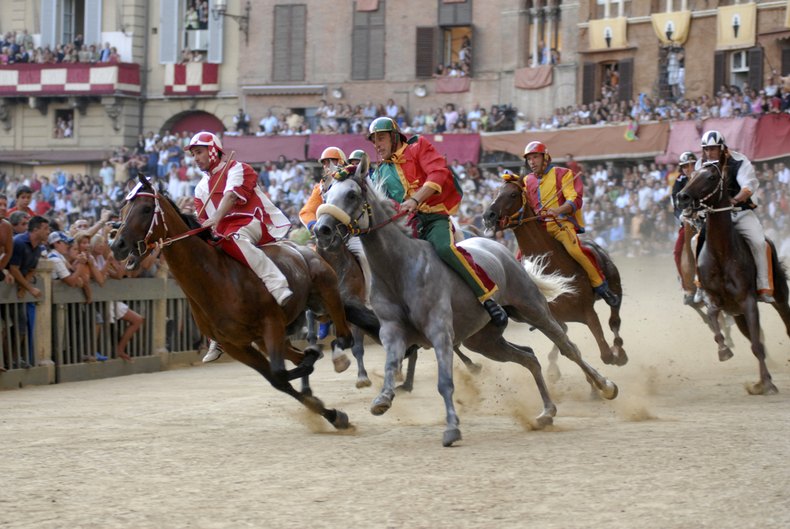
Laytown is not alone in offering horse racing on a unique surface/setting. In Italy, the Palio di Siena transforms a city square into a racetrack by placing densely packed sand/clay around the perimeter of the piazza. In this event, contested by 10 bareback riders representing a different local ward, horses charge around the tight Piazza del Campo three times. It has history dating back to the 17th century, and the biannual contest continues to grip the entire city every edition.
Elsewhere, high in the Swiss Alps, the White Turf festival at St. Moritz stages flat races on a frozen lake, where horses compete on snow and ice. Action takes place on three days in February, and there are a variety of race types such as Skijoring, Trotting and Gallop races. There is no danger of any horse cracking through the ice, regardless of the type, as it is usually 40 to 80cm thick.